
Winston’s Chimney Service Brings Certified Chimney Sweeping to Burke, VA
Burke homeowners know the comfort of a crackling fire after a long fall walk around the lake or a snowy afternoon in January. Behind that comfort is a chimney that needs regular care to keep performing as intended. At Winston’s Chimney Service, we have provided professional chimney sweeping throughout Northern Virginia since 1978. Our CSIA-certified technicians remove creosote, soot, and debris from wood-burning, oil, gas, and propane flues. Every visit follows a safety-first approach, and we take time to explain what we see so you feel confident about your system. Whether you live in a 1970s Burke Centre townhome or a newer single-family home near Burke Lake, our team works to keep your fireplace burning as cleanly and reliably as possible.
What Signs Tell Us a Burke Chimney Is Overdue for Sweeping?
Most chimneys give off clues long before a serious problem develops. The trouble is that many of these clues are easy to overlook or blame on something else. Knowing what to watch for helps you schedule service before buildup reaches a risky level.
Odors are often the first sign. A strong campfire or tar-like smell in your living room, especially during humid summer months, usually points to creosote deposits inside the flue. Performance changes are another clue. If fires seem harder to start or smoke drifts into the room, airflow through the chimney may be restricted.
Common warning signs we hear about from Burke homeowners include:
- Black, flaky residue falling into the firebox
- Smoke backing up into the room when a fire is lit
- Fires that burn poorly or go out quickly
- Scratching, chirping, or rustling sounds from inside the chimney
- Dark, oily staining around the damper or fireplace opening
- Small pieces of clay tile collecting at the base of the flue
If you notice any of these, our technicians can sweep the flue and evaluate the system to find the source. Catching these issues early often keeps repair costs lower and helps you avoid surprises during peak burning season.
Getting to Know Burke, Virginia
Burke sits in southern Fairfax County and takes its name from Silas Burke, a 19th-century farmer and local leader. The community grew around Burke Station, a stop on the Orange and Alexandria Railroad. During the Civil War, Confederate cavalry under J.E.B. Stuart raided the station in December 1862. Stuart reportedly used the telegraph there to send a joking message to the Union Quartermaster General complaining about the quality of captured mules.
Today, Burke blends that history with a strong love of the outdoors. Residents enjoy:
- Burke Lake Park, an 888-acre park with a 218-acre lake, fishing, a miniature train, a carousel, and a popular walking loop
- Lake Royal and Royal Lake Park for quiet trail walks
- The Burke Centre trail network connecting neighborhoods, ponds, and wooded areas
- Nearby Lake Accotink Park for paddling, biking, and picnics
Families love Burke for its well-regarded schools, close-knit neighborhoods, and easy commuter access through the Burke Centre VRE station. Many local homes include wood-burning or gas fireplaces, and we are glad to help keep them in good working order.
Why Do Factory-Built Fireplaces in Burke Townhomes Need a Specialized Sweeping Approach?
A large share of homes in Burke Centre and surrounding communities were built in the 1970s and 1980s. Many of these townhomes and single-family houses feature factory-built fireplaces rather than traditional masonry chimneys. These systems use metal flues housed inside a framed chase, and they require a different cleaning approach.
Metal flue liners can be scratched or damaged by the wrong tools. Our technicians use brushes sized and designed for prefabricated systems, which helps remove creosote without harming the liner. We also inspect parts unique to these fireplaces that masonry chimneys do not have.
During a factory-built fireplace sweep, we look closely at:
- Refractory panels inside the firebox for cracks or crumbling
- The metal chase cover on top of the chase for rust and pooling water
- Flue pipe sections for separation, warping, or corrosion
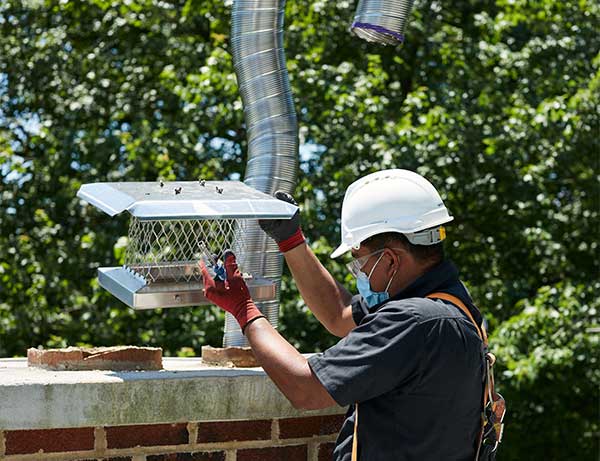
- Spark arrestor screens on the cap for clogging
- Clearances between the unit and nearby framing or insulation
Rusted chase covers are especially common in older Burke homes. Water can seep through and damage the flue, firebox, and surrounding wood framing. Spotting this during a routine sweep can help you address the problem before it spreads.
What Happens If You Light a Fire in a Cold Flue?
On a chilly Burke morning, the air inside your chimney can be colder and heavier than the warm air inside your home. This cold air column tends to sink down the flue. When you light a fire under these conditions, smoke has a hard time rising and may spill into the room instead.
A cold flue also affects creosote formation. As warm smoke hits cold flue walls, moisture and unburned particles condense faster and stick to the surface. Repeated cold starts can speed up buildup, which makes regular sweeping even more important.
Tips to help warm the flue before a fire:
- Open the damper a few minutes before lighting the fire
- Hold a lit roll of newspaper near the damper opening to start an upward draft
- Crack a nearby window slightly to reduce negative pressure in the home
- Try a top-down fire build, which tends to produce less initial smoke
- Use dry, seasoned firewood to help the fire heat up quickly
If smoke rollback happens often even with these steps, the cause may be more than a cold flue. Blockages, an undersized flue, or creosote restrictions can all play a role, and a sweep with inspection can help narrow it down.
Can Nearby Trees, Additions, or New Roofs Affect Chimney Draft Years Later?
Many Burke neighborhoods are known for their mature oaks, maples, and tulip poplars. Those trees provide shade and beauty, but they can also change how a chimney performs as they grow taller over the decades. The same is true for home additions and roof replacements.
A chimney is designed to draw based on its height relative to the roof and surrounding objects. Industry guidelines call for a chimney to extend at least three feet above where it passes through the roof and at least two feet higher than anything within ten feet. When a tree canopy or a new second-story addition rises above that line, wind can push air down the flue and disrupt the draft.
Changes that can affect chimney draft over time include:
- Tree branches growing close to or above the chimney top
- Second-story additions or dormers near the chimney
- Roof replacements that change pitch or height
- New neighboring structures that redirect wind patterns
- Tightly sealed windows and doors that reduce indoor airflow
Overhanging branches also drop leaves, twigs, and seed pods directly into the flue. During each sweep, we note any draft concerns and debris sources and can recommend solutions like tree trimming, a taller cap, or a chimney extension.
Is It Okay to Skip an Annual Sweep If We Rarely Use the Fireplace?
We understand the temptation. If you only light a few fires each winter, skipping a year may seem harmless. However, light use does not mean a chimney is free of problems. Many issues have nothing to do with how often you burn.
The National Fire Protection Association recommends an annual chimney inspection, with sweeping as needed. Even a lightly used chimney can collect nests, debris, and water damage. Gas and propane appliances that vent through the chimney also run all season, often without the homeowner thinking about the flue.
Reasons to keep an annual appointment even with light use:
- Animals may build nests in unused chimneys during spring
- Water entry can quietly damage flue tiles and mortar
- Gas and oil appliances may share the chimney and need clear venting
- Small cracks are easier and less costly to repair when found early
- Homeowners insurance claims may require proof of maintenance
For low-use fireplaces, our visit may involve very little cleaning. The inspection portion still offers real value and peace of mind.
How Can You Prepare Your Home Before Our Sweeping Appointment?
A little preparation helps our visit go smoothly and keeps the process as quick and tidy as possible. Our team handles the heavy lifting, but a few simple steps on your end make a difference.
Before your appointment, we recommend:
- Avoid burning a fire for at least 24 hours so ashes and the flue can cool
- Clear a six to eight foot area around the fireplace
- Remove decorations, screens, and fragile items from the mantel and hearth
- Keep pets and children in another room during the service
- Make a note of any odors, smoke issues, or sounds you have noticed
- Confirm we will have access to your roof or attic if needed
We bring drop cloths and HEPA vacuums to protect your home, so you will not need to cover furniture yourself. Sharing your observations with us helps our technicians focus on any trouble spots.
Let Winston’s Chimney Service Get Your Burke Fireplace Ready for the Season
Your fireplace deserves care from a team that has served Northern Virginia for more than four decades. At Winston’s Chimney Service, our CSIA-certified technicians sweep thoroughly, protect your home, and explain every finding in plain language. From Burke Centre townhomes to homes near Burke Lake Park, we are proud to help local families enjoy cleaner and safer fires. Schedule your chimney sweeping appointment before the busy fall and winter rush. Reach out today o book your visit. Our office is open Monday through Friday from 8:00 AM to 5:00 PM, and we look forward to helping your Burke home stay warm and comfortable all season long.