
Springfield Counts on Winston’s Chimney Service for Thorough Chimney Sweeping
Springfield grew quickly in the decades after World War II, and many of its brick colonials, split-levels, and ramblers still rely on chimneys that have served families for 50 years or more. Newer homes near Springfield Town Center and the Franconia-Springfield area bring their own venting systems and maintenance needs. At Winston’s Chimney Service, we have provided professional chimney sweeping across Northern Virginia since 1978. Our CSIA-certified technicians remove creosote, soot, and debris from wood-burning, oil, gas, and propane flues. Every visit follows a safety-first approach, and we explain what we find so you can make informed choices about your home. Our goal is to keep your fireplace and venting system performing as reliably as possible, season after season.
Why Does CSIA Certification Matter When Choosing a Chimney Sweep?
Anyone can buy a set of brushes and call themselves a chimney sweep. That is why credentials matter when you invite someone to work on a system that handles fire and combustion gases. The Chimney Safety Institute of America is a nonprofit organization that sets professional standards for the industry.
To earn certification, a technician must pass an exam covering chimney construction, venting principles, and the national codes and standards that guide inspections, including NFPA 211. Certification is not a one-time achievement. Technicians must recertify every three years and complete continuing education to stay current.
Here is what CSIA certification means for your appointment:
- Your technician understands how wood, oil, gas, and propane systems vent differently
- Inspections are measured against recognized industry standards
- Problems are identified based on training, not guesswork
- Recommendations focus on what your system actually needs
- Your technician follows current best practices for protecting your home during service
Our team views certification as a starting point. Combined with more than 45 years of company experience, it allows us to deliver thorough, educational service that Springfield homeowners can trust.
A Closer Look at Springfield, Virginia
Springfield sits in southeastern Fairfax County and takes its name from a stop on the Orange and Alexandria Railroad. For much of its early history, the area was quiet farmland. That changed after World War II, when developers built thousands of homes for families drawn to jobs in Washington, D.C., and at nearby Fort Belvoir. Today, Springfield is known regionally for the Springfield Interchange, where I-95, I-395, and I-495 meet.
Residents have no shortage of places to unwind. Popular spots include:
- Lake Accotink Park, built around a lake the U.S. Army created in 1918, with a trail loop, canoe rentals, and a vintage carousel
- Hidden Pond Nature Center in West Springfield, offering wooded trails and family-friendly programs
- The Cross County Trail, which runs through Springfield’s stream valleys
- Springfield Town Center for shopping, dining, and entertainment
People love Springfield for its commuter convenience, with Metro and VRE service at the Franconia-Springfield station, along with diverse neighborhoods and a strong military community. On cool evenings, many local families gather around the fireplace, and we are proud to help keep those fireplaces in good shape.
Do Chimney Swifts Change When We Can Sweep Your Chimney?
They can. Chimney swifts are small, cigar-shaped birds that spend spring and summer in Virginia before migrating to South America. They nest almost exclusively in chimneys, and Springfield’s older masonry flues make attractive homes. Many homeowners first notice them when they hear chattering sounds from the fireplace in June or July.
Chimney swifts are protected under the federal Migratory Bird Treaty Act. Once they are actively nesting, the nest cannot be removed or disturbed until the birds leave for the season. In Northern Virginia, swifts usually arrive around April and depart by early fall.
If swifts move into your chimney, here is what to keep in mind:
- Keep the damper closed to reduce noise and keep birds out of your living space
- Avoid lighting fires or running appliances that vent through that flue while birds are present
- Schedule your chimney sweeping for after the birds migrate, usually in fall
- Plan to install a chimney cap once the flue is cleared to help prevent return visits
- Contact us if a bird gets into the house so we can offer guidance
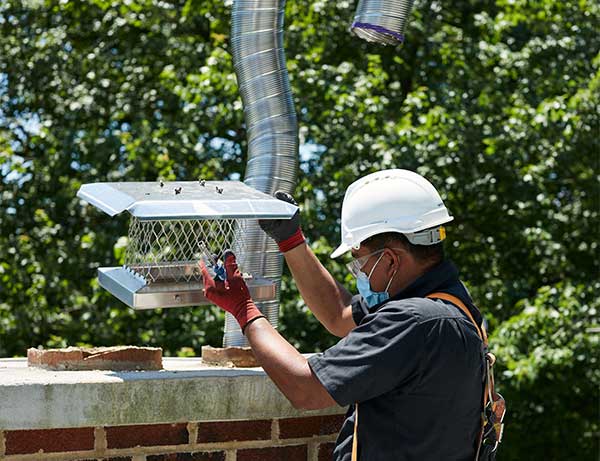
Fall sweeping after swift season fits well with heating season prep. We remove nesting material and debris, inspect the flue, and recommend a cap that fits your chimney.
Can Creosote Sweeping Logs Replace a Professional Chimney Sweeping?
Creosote sweeping logs are sold at many hardware stores, and they promise an easy way to clean your chimney. These products contain chemical additives that, when burned, are meant to make creosote drier and more brittle. They can be a helpful supplement between professional cleanings, but they are not a replacement for a hands-on sweep.
Loosened creosote has to go somewhere. Some flakes fall back down into the firebox, but much of it can land on the smoke shelf or collect at offsets in the flue. Without removal, this loose material can become a concentrated pile of fuel. Sweeping logs also do nothing to clear nests, leaves, or fallen tile fragments.
Limitations of sweeping logs include:
- They are most useful on lighter creosote and have limited effect on glazed deposits
- They do not remove the debris they loosen
- They cannot identify cracked liners, damaged crowns, or water entry
- They offer no help for gas, oil, or propane flues
- They may create a false sense of security that delays needed service
If you use sweeping logs, let our technicians know during your visit. We can check whether loosened buildup has collected anywhere in the system and clear it out.
Do Fireplace Inserts and Wood Stoves Need a Different Sweeping Approach?
Yes. Many Springfield homeowners have added wood-burning or pellet inserts to older masonry fireplaces to get more heat from each fire. Wood stoves are also popular in homes that rely on wood for supplemental heat. These appliances burn hotter and longer than open fireplaces, and their internal components require specialized care.
An insert typically connects to a liner that runs up through the original chimney. Current standards call for a direct connection between the appliance and a properly sized liner. Some older installations simply vent the insert into the existing masonry flue, which can allow creosote to collect in areas that are hard to reach.
During an insert or stove sweep, our team focuses on:
- Cleaning the full length of the liner connected to the appliance
- Removing and cleaning baffle plates or secondary burn tubes
- Checking catalytic combustors for clogging or deterioration
- Inspecting door gaskets for wear that can affect airflow
- Verifying the connection between the appliance and the liner
Because these appliances often run for hours at a time during winter, they may need sweeping more than once a season. We assess buildup at each visit and recommend a schedule that fits how you use your stove or insert.
Why Does the Smoke Chamber Need Attention During Every Sweep?
The smoke chamber is the funnel-shaped area directly above the damper and below the flue. It guides smoke from the wide firebox into the narrower flue. Because of its shape and location, it is one of the places where creosote collects most heavily, and it is easy to overlook.
In many older Springfield chimneys, the smoke chamber was built with stepped, or corbelled, brickwork. Those ledges create rough surfaces where creosote can cling and build up. Modern codes call for the smoke chamber to be parged, which means coated with a smooth layer of refractory mortar. A smooth surface helps smoke move upward more freely and gives creosote fewer places to accumulate.
Smoke chamber issues we commonly find include:
- Thick creosote deposits on corbelled brick ledges
- Cracked or missing parging that exposes rough masonry
- Gaps in mortar joints that can let heat reach nearby framing
- Debris resting on the smoke shelf behind the damper
- Rust or warping in the damper assembly below
We clean the smoke chamber with tools designed for its angled walls. If we notice rough corbelling or failing parging, we explain how smoke chamber parging can help reduce future buildup and improve draft.
Schedule Chimney Sweeping in Springfield With Winston’s Chimney Service
From post-war ramblers to newer homes near the Franconia-Springfield Parkway, every Springfield chimney deserves careful, knowledgeable care. At Winston’s Chimney Service, our CSIA-certified technicians provide thorough chimney sweeping, protect your home with drop cloths and HEPA vacuums, and explain every finding in plain language. We have served Northern Virginia since 1978, and we treat each home as if it were our own. Get your chimney sweeping on the calendar before the fall and winter rush fills our schedule. Our office is open Monday through Friday from 8:00 AM to 5:00 PM, and we look forward to helping your Springfield home enjoy cleaner and safer fires all season long.