
Fairfax, VA Homeowners Rely on Winston’s Chimney Service for Expert Chimney Masonry Repair
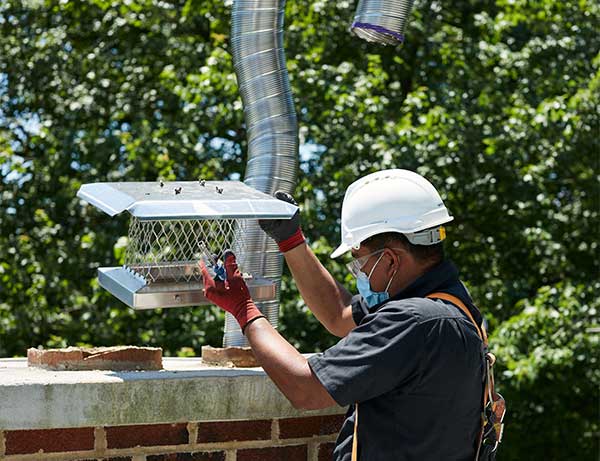
Fairfax homeowners know that keeping up with a property takes consistent attention, and few parts of a home are more quietly demanding than the chimney. From the outside, a chimney can look reasonably intact while the mortar is eroding, the crown is cracking, and water has already begun working its way into the structure. By the time visible damage becomes impossible to ignore, the repair scope has usually grown well beyond what early intervention would have required. At Winston’s Chimney Service, we have been performing chimney masonry repair throughout Northern Virginia since 1978. Our CSIA-certified technicians bring a thorough, system-level approach to every job, and we work to give Fairfax homeowners an accurate picture of what their chimney actually needs rather than a rushed diagnosis and a one-size-fits-all fix.
How Does the Type of Brick in an Original Chimney Affect the Repair Process?
Not all brick is the same, and the differences matter more in chimney masonry repair than most homeowners expect. Fairfax has a diverse housing stock that spans several decades, and the brick used in chimneys built in the 1950s through the 1990s varies considerably in composition, density, hardness, and porosity. When a repair involves replacing damaged brick or repointing mortar joints, matching those properties as closely as possible is one of the most important factors in whether the repair holds over time and whether it ages consistently with the surrounding masonry.
The most common problem with mismatched brick replacement is visual: new brick that does not match the original in color, texture, or size stands out immediately and reduces the overall appearance of the chimney. But the functional concerns run deeper than aesthetics.
Brick hardness and porosity interact directly with mortar performance:
- Softer, more porous brick from older construction absorbs mortar moisture during the curing process in a way that newer, denser brick does not. Using mortar formulated for modern brick on older porous brick can lead to adhesion failure at the joint interface
- Mismatched expansion rates between new and existing brick cause stress at repair boundaries during thermal cycling, which can reopen cracks near the edges of the repaired section
- Density differences affect how water moves through a repaired section. If new brick is significantly denser than surrounding original brick, water may be redirected into the original masonry at a higher concentration than it was before the repair
- Color and texture inconsistencies can also indicate that the brick was fired at a different temperature or manufactured with different raw materials, which affects long-term weathering behavior
Our approach to brick matching involves sourcing materials that align as closely as possible with the original construction in both appearance and physical properties. When a perfect match is not available, we discuss the options with the homeowner openly so they can make an informed decision about how to proceed.
Fairfax, VA: A County Seat With Something for Everyone
Fairfax sits at the heart of one of the most dynamic counties in the country, and the city itself carries a distinct sense of place despite its suburban surroundings. The Historic Fairfax City downtown area features locally owned restaurants, shops, and the Ratcliffe-Allison-Pozer House, a preserved 19th century home that serves as a connection to the city’s pre-Civil War past.
Daniels Run Park and Van Dyck Park give residents green space and recreational access close to home, while the proximity to George Mason University brings an academic and cultural energy to the community. Fairfax also sits within easy reach of the broader Northern Virginia trail network, and its well-established neighborhoods attract families who value both community character and access to everything the Washington metropolitan area has to offer. For homeowners invested in keeping their properties in good shape within this close-knit community, understanding what their chimney needs is part of responsible ownership.
Can Nearby Home Additions, New Roofs, or Tree Growth Affect Chimney Performance Years After a House Was Built?
This is a question that does not come up as often as it should, and it catches some homeowners off guard because they cannot understand why a chimney that worked well for decades has suddenly started behaving differently. The answer is that a chimney does not function in isolation. Its performance depends on the relationship between the flue height, the roofline, and the surrounding environment, and when any of those elements change, the chimney’s behavior can change with it.
Changes around a home that can affect both draft performance and masonry condition include:
- A new roof or added roof pitch that raises the roofline and changes how wind moves over the top of the chimney. A flue that previously extended adequately above the roof may now sit too close to the new roofline, creating negative pressure zones that force air back down the flue instead of drawing it upward
- Home additions that extend the roofline or add adjoining walls near the chimney can redirect wind in ways that disrupt the pressure differential the chimney relies on for draft
- Mature trees that have grown significantly taller than the chimney over the years can create downdraft conditions during certain wind directions, and branches that now reach or overhang the chimney deposit debris and hold moisture against the masonry
- New neighboring construction on adjacent lots that changes the local wind pattern around the home, particularly in more densely developed parts of Fairfax where infill construction is not uncommon
Beyond draft, these changes can affect masonry condition by altering how rain hits the chimney, how long the masonry stays wet, and whether debris accumulates in ways that hold moisture against joints and surfaces. When we assess a chimney that has developed new problems in an otherwise stable home, we factor in what may have changed around the chimney, not just what has changed on the chimney itself.
What Happens When You Light a Fire in a Flue That Is Still Damp From Heavy Rain?
This is something homeowners encounter without always recognizing the connection between the rain they just had and the fire that is smoking up their living room. Firing up a fireplace after significant rainfall, particularly when the chimney has any existing masonry damage, creates conditions that affect both performance and the long-term health of the chimney structure.
When moisture is present in the flue, several things happen that would not occur in a dry, well-conditioned chimney:
- Draft takes much longer to establish, because the cold, damp air column inside the flue resists being displaced by the warm air rising from the fire. Smoke rolls into the room during this period rather than traveling up the flue
- Steam is produced as the fire heats the damp interior surfaces, which mixes with combustion gases and creates a thicker, more acidic smoke environment inside the firebox and lower flue. Over time, this acidic moisture accelerates deterioration of mortar joints and the flue liner
- Thermal shock risk increases when a cold, wet flue is heated rapidly. Existing cracks in the masonry or liner expand more aggressively under rapid temperature changes than they would in a dry flue that warms gradually
- Creosote formation accelerates because damp, cooler flue surfaces cause combustion gases to condense more rapidly, depositing creosote at a higher rate than a properly dried and warmed flue would
If your chimney has existing masonry damage, rain infiltration into the flue is more likely, and the cycle of wet-fire-wet-fire steadily worsens the interior condition. Addressing the masonry issues that allow moisture into the flue in the first place is the most direct way to break that cycle.
What Signs Indicate That a Chimney Has Moved Beyond Repair Into Partial Rebuild Territory?
This is a question we answer honestly when it comes up during an inspection, and it comes up more often than homeowners expect in a region where chimneys have been through decades of weather without consistent maintenance. Tuckpointing, crown repair, and brick replacement are the right solutions for a wide range of masonry conditions, but they have limits. When deterioration has advanced past those limits, a partial or full section rebuild becomes the more appropriate path.
Signs that a chimney has moved into rebuild territory include:
- Multiple courses of loose or shifting brick anywhere along the stack, particularly in the upper section above the roofline where weather exposure is most intense
- A chimney that shows visible lean or tilt when viewed from the yard. Even a slight angle away from plumb indicates that structural movement has occurred that tuckpointing cannot reverse
- Separation of the chimney from the house structure, where the chimney chase has pulled away from the exterior wall, indicating foundation movement or significant structural compromise at the base
- Horizontal cracking in the firebox walls that runs through the full depth of the brick rather than just the surface. This level of cracking points to structural stress beyond what surface repairs can address
- Interior masonry collapse inside the flue, where brick or large sections of mortar have fallen into the flue channel and the surrounding structure has lost its cohesion
- Repeated failure of previous repairs, where tuckpointing or patching has been performed before but continues to fail within a short period, indicating that the underlying structure is too compromised to hold repairs
When we identify these conditions, we walk the homeowner through the findings clearly. A rebuild of the upper section of a chimney is a more significant investment than tuckpointing, but it is also the repair that actually restores structural integrity rather than temporarily masking a problem that will return.
How Does Seasonal Fireplace Use, or a Lack of It, Affect Masonry Deterioration?
Homeowners sometimes assume that a fireplace they rarely use is a fireplace that is not accumulating damage. In reality, the pattern of use, whether frequent, seasonal, or nearly absent, affects how masonry deteriorates in ways that are worth understanding.
Chimneys that are used regularly through the heating season develop a reasonably consistent thermal cycle. The flue heats up, dries out internal moisture, and provides a regular draw that moves air through the system. This does not prevent masonry deterioration, but it does mean that moisture introduced through rain or humidity has a better chance of being expelled before it sits long enough to cause significant damage.
Chimneys that are rarely used present a different set of conditions:
- Chronically damp flue interiors because the flue never heats up enough to drive out moisture that has seeped in through crown cracks, eroded joints, or a deteriorating liner
- Accelerated biological growth including moss, mold, and algae inside the flue and on shaded exterior surfaces, fed by continuous moisture and the absence of the drying effect that regular use would provide
- Animal and debris blockages that go unnoticed for longer periods because no one is lighting fires and noticing reduced draft or smoke rollout
- Faster mortar erosion in the firebox because the thermal cycling that would otherwise help manage moisture never occurs, leaving the firebox walls in a persistently damp state
Whether you use your fireplace regularly or only occasionally, the chimney is exposed to weather year-round. The masonry does not take a break between fire seasons, and neither does the moisture, freeze-thaw pressure, and biological activity working against it.
Schedule Your Chimney Masonry Repair in Fairfax, VA With Winston’s Chimney Service
If your Fairfax chimney is showing signs of wear, whether that is crumbling mortar, spalling brick, a cracked crown, flashing leaks, or any indication that water has been moving through the structure, the most practical step you can take is getting it assessed before the damage compounds further. Masonry problems do not stabilize on their own, and each season that passes without attention typically means a broader repair when you finally do address it. Winston’s Chimney Service has been serving Fairfax and the surrounding Northern Virginia area since 1978, and our CSIA-certified technicians are ready to give your chimney an honest, thorough evaluation and the skilled repair work it needs. Get in touch with the team at Winston’s Chimney Service today to schedule your chimney masonry repair in Fairfax, VA.