
Winston’s Chimney Service: Great Falls, VA Chimney Leak Repair Experts
Great Falls, VA is a community that prides itself on architectural beauty and a high standard of living, and at Winston’s Chimney Service, we are dedicated to preserving those standards by providing the most comprehensive chimney leak repair services in the region. A leaking chimney is more than a minor annoyance; it is a direct threat to the structural integrity of your home and the health of your masonry. Our team understands the unique challenges faced by homeowners in Northern Virginia, where shifting temperatures and heavy seasonal rains can wreak havoc on chimney systems. Whether you have noticed a small drip in the firebox or water stains appearing on your ceiling, we bring decades of specialized experience to ensure your home remains as dry and protected as possible.
How Can I Prevent Chimney Leaks?
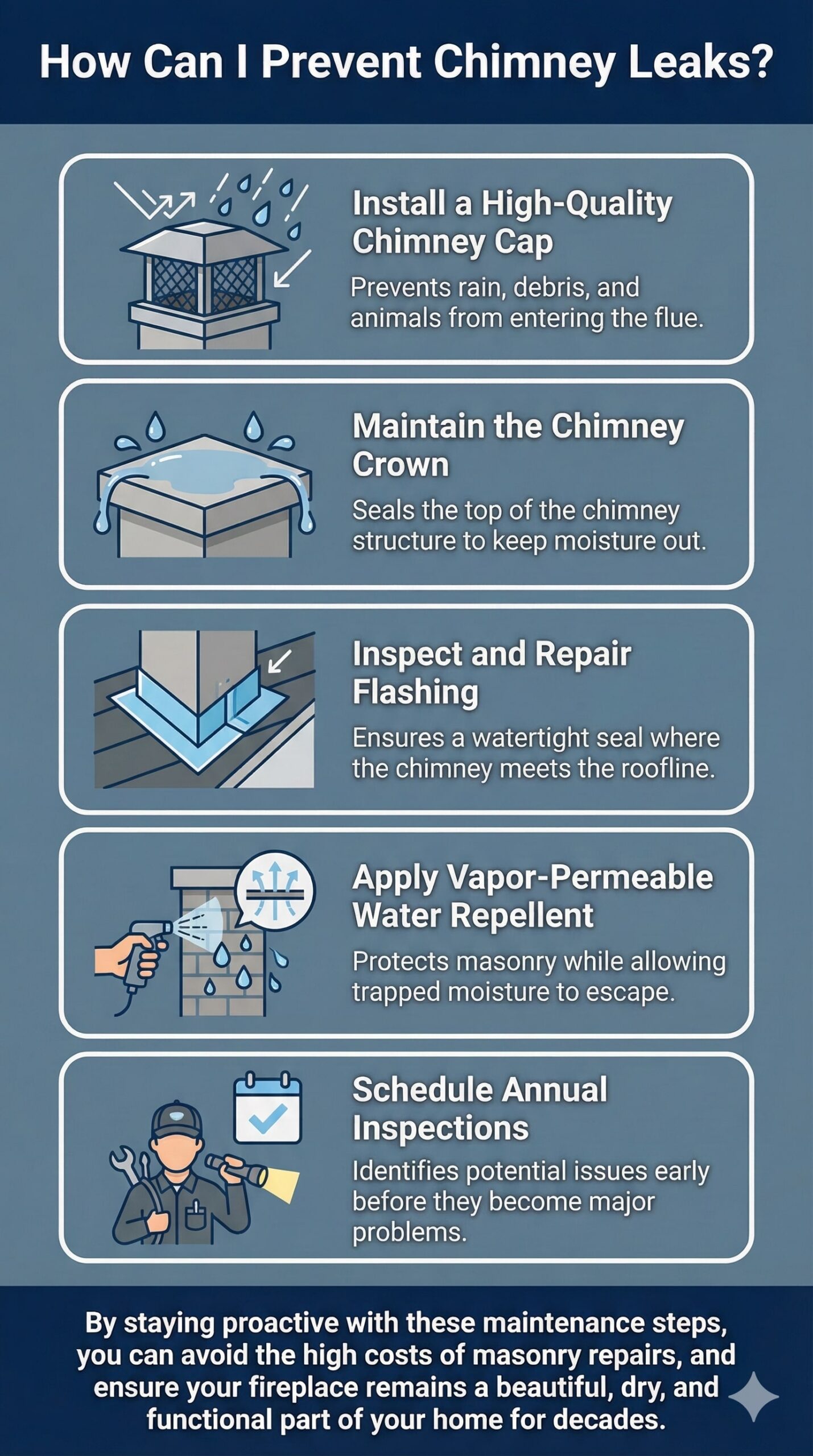
Preventing water from entering your chimney is far more cost-effective than repairing the damage it causes. Because masonry is naturally porous, it requires a multi-layered approach to protection. At Winston’s Chimney Service, we focus on several key preventative measures to keep your Great Falls home as dry as possible:
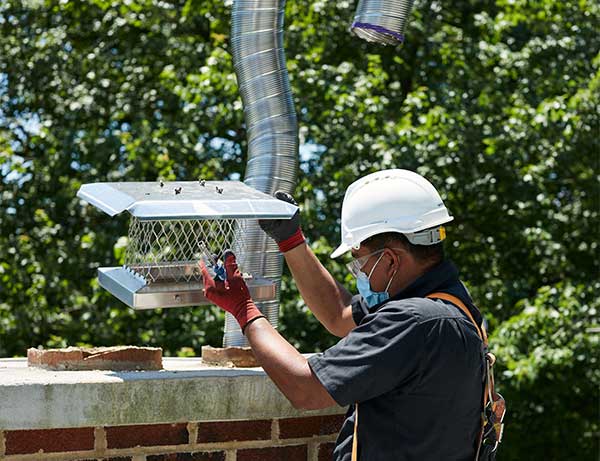
- Install a High-Quality Chimney Cap: Think of a chimney cap as an umbrella for your flue. Without one, rain falls directly into the interior of your chimney, where it can rust the damper, damage the flue liner, and rot the floorboards in your firebox. We install professional-grade stainless steel or copper caps that cover the entire top of the chimney, providing the most reliable barrier against rain, snow, and debris.
- Maintain the Chimney Crown: The crown is the concrete slab at the top of your chimney. It should be sloped to shed water away from the flue. Over time, these crowns can crack due to the freeze-thaw cycle. We apply professional crown sealants—flexible, waterproof membranes—that bridge existing cracks and prevent new ones from forming, ensuring water runs off the roof rather than into the masonry.
- Inspect and Repair Flashing: The flashing is the metal stripping where your chimney meets your roofline. This is one of the most common failure points for leaks. We ensure the flashing is properly layered and sealed with high-quality, weather-resistant materials to prevent water from seeping into your attic or ceilings.
- Apply Vapor-Permeable Water Repellent: Standard bricks act like sponges. We apply professional-grade silane-siloxane water repellents to the exterior masonry. These products are specifically designed to keep liquid water out while still allowing internal moisture to escape, protecting your bricks from the inside out without causing them to “suffocate.”
- Schedule Annual Inspections: The most effective way to prevent a leak is to catch a small crack before it becomes a major gap. During our annual inspections, we use high-definition cameras to check for early signs of mortar decay or crown failure, allowing us to make minor adjustments that keep your system functioning as safely as possible.
By staying proactive with these maintenance steps, you can avoid the high costs of masonry reconstruction and ensure your fireplace remains a beautiful, dry, and functional part of your home for decades.
Book your appointment with our team today.
What Happens if You Light a Fire With a Damp or Wet Flue?
Lighting a fire in a chimney that has recently been subjected to heavy rain or a persistent leak can lead to several complications that affect both the appliance and your indoor air quality. When the interior of your flue or the masonry itself is saturated with moisture, the initial heat from a fire does not go toward creating a strong draft; instead, that energy is spent evaporating the trapped water. This process can lead to several issues:
- Excessive Steam & Thermal Shock: As the water turns to steam, it expands rapidly. If that moisture is trapped within the pores of the brick or the mortar joints, the internal pressure can cause “spalling,” where the faces of the bricks pop off or the mortar begins to crumble.
- Rapid Creosote Liquefaction: If you have existing creosote buildup, the moisture turns that soot into a thick, acidic slurry. This liquid can seep through mortar joints or cracks in the liner, causing foul odors to permeate your home and potentially damaging the structural materials surrounding the chimney.
- Poor Draft and Smoke Backup: A cold, damp flue is heavy with dense air. Until the moisture is driven out, the chimney will struggle to establish an upward draft, often resulting in smoke backing up into your living room during the first thirty minutes of the fire.
- Increased Risk of Mold: Persistent dampness combined with the organic material found in soot creates a breeding ground for mold. Lighting a fire might dry the surface, but if the leak isn’t repaired, the cycle of moisture and warmth can accelerate mold growth within the chimney structure.
At Winston’s Chimney Service, we recommend having your system evaluated immediately if you suspect water is entering the flue. We focus on identifying the entry point, whether it is a cracked chimney crown, failing flashing, or a missing cap, to ensure your fireplace remains as functional and as safe as possible for your family.
Your Great Falls, VA Chimney Company: Serving A Community Of Natural Beauty
Great Falls, VA, is one of the most picturesque and prestigious areas in the country, known for its sprawling estates and its deep connection to the natural landscape of the Potomac River. Residents here value the peace and quiet of a wooded suburb while enjoying the sophisticated amenities of a world-class community. We have spent years working on the diverse range of homes in Great Falls, from historic farmhouses to modern architectural masterpieces, ensuring that every chimney we service matches the quality of the home it serves.
The area is most famous for Great Falls Park, a stunning National Park Service site where the Potomac River drops seventy-six feet through a series of jagged cataracts. It is a favorite spot for hiking, rock climbing, and taking in the breathtaking views from the overlooks. Locals also frequent Riverbend Park for its quieter trails and kayaking opportunities. Between the natural beauty and the community atmosphere found at the Village Centre, Great Falls is a place where people truly care about the longevity and beauty of their homes. At Winston’s Chimney Service, we share that passion. We are proud to be the trusted local experts helping Great Falls homeowners protect their property from the damaging effects of water and time.
Does Freeze/Thaw Weathering Accelerate Deterioration? Does Waterproofing Help?
In Great Falls, our winters fluctuate between freezing nights and milder days, creating the perfect conditions for the “freeze-thaw cycle.” This is perhaps the single most destructive force acting on your chimney. Understanding how this works is essential for any homeowner looking to avoid costly masonry reconstruction.
- The Mechanism of Decay: Masonry materials like brick, stone, and mortar are porous, meaning they act like a sponge. When it rains or snow melts, water is absorbed into these pores. When the temperature drops below freezing, that water expands by approximately nine percent. This internal expansion puts immense pressure on the masonry from the inside out.
- The Cumulative Effect: Over a single winter, your chimney may go through dozens of these cycles. Each time, the pores stretch a little further. Eventually, the structural bonds of the brick fail, leading to cracks, crumbling mortar (delamination), and falling debris.
- The Role of Professional Waterproofing: To combat this, we offer specialized vapor-permeable waterproofing treatments. Unlike hardware store sealants, which can trap moisture inside the brick and cause even more damage, our professional-grade silane-siloxane water repellents allow the brick to “breathe.” This means internal vapors can escape, but liquid water from the outside is blocked from entering.
- Long-Term Protection: By applying these repellents, we can significantly slow down the rate of deterioration. It keeps the masonry drier, which in turn makes the chimney more resilient against the harsh Northern Virginia winters.
We believe in a proactive approach. By treating your chimney before the cracks become visible to the naked eye, we can help you avoid the high costs of a full chimney rebuild. Our team at Winston’s Chimney Service evaluates the specific porosity of your masonry to apply the most effective treatment possible, ensuring your chimney stays as strong as possible for years to come.
Are Old, Unlined Chimneys More Prone to Hidden Interior Decay?
Many of the older homes in the Great Falls area feature chimneys built before modern building codes required flue liners. While the exterior of these chimneys may look stately and solid, the interior is often a completely different story. An unlined chimney is a significant risk factor for both water damage and structural failure.
- The Problem with Porosity: Without a liner (typically made of clay tiles, stainless steel, or cast-in-place masonry), the acidic byproducts of combustion—including water vapor, carbon monoxide, and sulfurous gasses—come into direct contact with the interior bricks. These gasses are highly corrosive and eat away at the mortar joints from the inside.
- Hidden “Sand Castle” Mortar: Over decades, the mortar between the bricks can be reduced to a sandy consistency. Because you cannot see the interior of the chimney without specialized camera equipment, you might be unaware that the only thing holding your chimney together is gravity and a thin layer of exterior pointing.
- Moisture Seepage: Unlined chimneys are much more susceptible to leaks because there is no secondary barrier to stop water. Once water enters through the top or through small cracks in the masonry, it can travel freely throughout the stack, leading to wood rot in the house framing or ruined drywall in the rooms the chimney passes through.
- The Risk of Heat Transfer: A liner’s job is also to insulate the chimney. Without it, heat can transfer through the masonry to nearby combustible materials like wooden studs or floor joists. Over time, this lowers the ignition temperature of that wood through a process called pyrolysis, making a house fire much more likely.
At Winston’s Chimney Service, we use high-definition video scanning to inspect the interior of your flue. This allows us to show you exactly what is happening inside your chimney. If we find that your unlined chimney is decaying, we can provide options for relining that will restore the integrity of the system and make it work as efficiently as possible while protecting your home from hidden leaks.
What Early Warning Signs Show That a Chimney Is at Risk of Partial Collapse?
A chimney that has begun to lean or show large vertical cracks is a serious structural concern. In Great Falls, soil composition and the weight of massive masonry stacks can sometimes lead to foundation settlement, which manifests as a leaning chimney. Recognizing the early warning signs is vital to prevent a catastrophic collapse that could damage your roof or injure someone on the ground.
- Gaps at the Siding or Roofline: One of the first things we look for is a visible gap where the chimney meets the exterior of the house. If you see daylight between your chimney and your siding, or if the flashing has been pulled away from the roof, the chimney is physically moving away from the structure.
- Horizontal and Vertical Cracking: While small “hairline” cracks in mortar are common, large cracks that run through the bricks themselves are a major red flag. Vertical cracks often indicate settling, while horizontal cracks can suggest that the weight of the chimney is no longer being distributed evenly, putting the stack at risk of buckling.
- Cracked or Tilting Chimney Crown: The crown is the concrete slab at the very top. If it is cracked, it allows water to pour into the center of the chimney structure. This softens the internal mortar and can lead to a “hollow” chimney that is structurally unsound.
- Debris in the Firebox: If you are finding bits of brick or chunks of mortar falling into your fireplace, the internal structure is failing. This loss of material weakens the “skeleton” of the chimney.
- Exterior “Step” Cracking: In brickwork, cracks that follow the mortar joints in a diagonal, stair-step pattern are a classic sign of foundation movement.
If you notice any of these signs, it is imperative to call Winston’s Chimney Service for a structural evaluation. We don’t just “patch” these issues; we investigate why they are happening. Whether it requires masonry reinforcement, foundation stabilization, or a partial teardown and rebuild, we ensure the work is done to the highest standards to keep your property as safe as possible.
Schedule Your Great Falls Chimney Leak Repair Today
Don’t let a small leak turn into a major restoration project. At Winston’s Chimney Service, we are committed to providing the residents of Great Falls, VA, with the most reliable, professional, and thorough chimney care available. From waterproofing and crown repair to complex structural stabilization, our team has the tools and the expertise to protect your home. We pride ourselves on our attention to detail and our respect for your property.
Is your chimney showing signs of water damage? We can help. Book your leaky chimney repair today.