
Winter finally seems to be behind us here in Northern Virginia and the greater D.C. area, and it’s a good time to assess how the cold months may have affected your chimney. Communities from Arlington to Fairfax to Alexandria experienced plenty of freezing temperatures this season, and that kind of weather can take a real toll on masonry chimneys. One of the most common culprits? Freeze-thaw damage.
What Is Freeze-Thaw Damage? How Does It Affect Chimneys?
Freeze-thaw damage occurs when water penetrates the porous surface of brick, mortar, or stone and then freezes as temperatures drop. When water freezes, it expands by roughly nine percent, generating enough force to crack and break apart even the sturdiest masonry materials from the inside out.
For chimneys in communities like Arlington, Fairfax, and Alexandria, this cycle can repeat dozens of times throughout a single winter season. Each round of freezing and thawing compounds the damage, gradually widening existing cracks, loosening mortar joints, and weakening the chimney’s overall structure.
Over time, what starts as minor surface wear can develop into serious structural concerns. Bricks may begin to spall, meaning their outer faces flake or pop off entirely, and deteriorating mortar joints can crumble to the point where they no longer hold the masonry together. Left unaddressed, this kind of damage can lead to water intrusion inside your home and result in significantly more expensive repairs down the road.
How Does Water Get Into a Chimney in the First Place?
Water finds its way into chimney masonry through several common entry points. Many homeowners across the D.C. metro don’t realize just how many opportunities moisture has to reach the brickwork, especially during the wet, cold months we experience in this region.
-
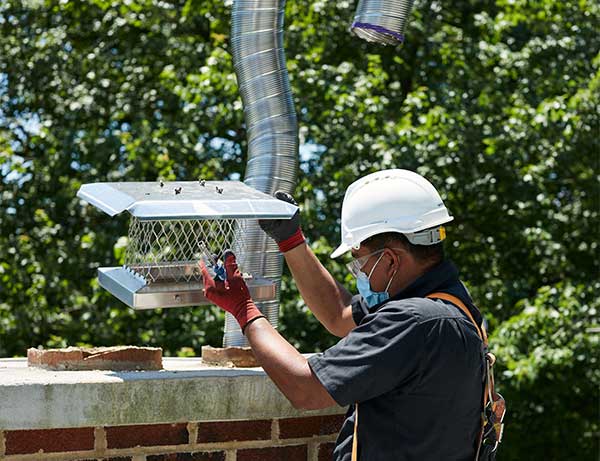
Cracked or missing chimney cap. Without a functioning cap on top of the flue, rain and snow fall directly into the chimney opening, saturating the interior masonry and flue liner.
-
Deteriorating mortar joints. As mortar ages and breaks down, gaps form between bricks that allow moisture to seep in and travel deeper into the chimney structure.
-
Damaged or improperly installed flashing. Flashing seals the joint where the chimney meets the roofline. When it’s cracked, corroded, or poorly fitted, water pools and penetrates at this vulnerable intersection.
-
Porous brick and stone surfaces. Masonry is naturally absorbent. Without a protective waterproofing treatment, bricks and mortar soak up moisture like a sponge during every rainstorm.
-
Cracked or failed chimney crown. The chimney crown is the concrete or mortar slab at the top of the chimney. Cracks in the crown give water a direct path into the masonry below.
What Are the Signs of Freeze-Thaw Damage on a Chimney?
After a long winter in Northern Virginia and the surrounding areas, freeze-thaw damage doesn’t always announce itself dramatically. Some signs are subtle at first but become more serious over time. Here’s what to watch for:
-
Spalling bricks. When the faces of bricks flake, chip, or pop off, it’s a clear indication that moisture has been freezing and expanding inside the masonry.
-
Crumbling or missing mortar. Mortar joints that are receding, sandy, or falling out suggest that repeated freeze-thaw cycles have broken down the bonding material between bricks.
-
Visible cracks in the chimney structure. Horizontal or stair-step cracks along the brickwork point to internal pressure from expanding ice.
-
White staining (efflorescence). A white, chalky residue on the exterior of the bricks means water is moving through the masonry and depositing mineral salts on the surface as it evaporates.
-
Leaning or shifted chimney. In severe cases, enough structural deterioration can cause the chimney to visibly lean or pull away from the home.
-
Brick or mortar debris on the roof or ground. Finding fragments around the base of the chimney or scattered on the roofline below it is a strong indicator of active deterioration.
How Much Does It Cost to Repair Freeze-Thaw Damage on a Chimney?
The cost of repairing freeze-thaw damage varies significantly depending on the extent of the deterioration and the type of work involved. Minor mortar joint repair, known as tuckpointing, typically falls on the lower end of the spectrum, while more extensive structural rebuilds or full crown replacements can be a considerably larger investment.
For homeowners in Arlington, Alexandria, Fairfax, and throughout the greater D.C. metro area, it’s worth noting that costs also depend on chimney height, accessibility, and the specific materials needed for a proper repair. A chimney that’s experienced multiple winters of unchecked freeze-thaw cycling will almost always cost more to restore than one that’s been regularly maintained along the way.
The most cost-effective approach is to address damage early and proactively, before small cracks and deteriorating mortar turn into major structural problems. A professional chimney inspection from a CSIA-certified technician can identify exactly what work is needed and help you understand the full scope and budget before any repairs begin.
What’s the Best Way to Protect a Masonry Chimney From Freeze-Thaw Damage?
Preventing freeze-thaw damage is far more affordable and less disruptive than repairing it after the fact. A combination of regular maintenance and targeted protective measures can keep your chimney in strong condition winter after winter.
-
Apply a breathable waterproofing sealant. A vapor-permeable sealant prevents water from entering the masonry while still allowing internal moisture to escape, which is critical for long-term brick health.
-
Repair mortar joints promptly. Tuckpointing damaged or receding mortar joints before winter arrives eliminates one of the most common entry points for water.
-
Install or replace the chimney cap. A properly fitted chimney cap keeps rain, snow, and debris from falling directly into the flue and saturating the surrounding masonry.
-
Maintain the chimney crown. Sealing cracks in the crown, or replacing it entirely when it’s deteriorated, prevents water from pooling at the top of the chimney and seeping downward.
-
Schedule annual professional inspections. A CSIA-certified technician can catch early signs of moisture damage and freeze-thaw wear before they escalate into larger, more expensive problems.
Schedule Your Post-Winter Chimney Inspection
Winter may be winding down, but its impact on your chimney could be lingering. If your home is in Arlington, Fairfax, Alexandria, or anywhere across the D.C. metro, now is the ideal time to have your chimney professionally evaluated. The team at Winston’s Chimney Service has been helping homeowners protect their masonry for over 45 years. Reach out today to schedule an inspection and get ahead of any needed masonry repairs.